Fallout Series Review: Prime Video’s Wildest Post-Apocalypse Yet
The Fallout series landing on Prime Video feels like one of those rare moments when gamers, casual viewers, and sci-fi lovers are all vibing on the same wavelength. Based on the iconic video game franchise, this show throws us into a post-apocalyptic world that’s broken, bizarre, violent, and weirdly funny at the same time. And honestly, that mix is exactly why it works.
Even if you’ve never touched a Fallout game in your life, the series doesn’t make you feel lost or left out. It’s built in a way that welcomes newcomers while quietly rewarding longtime fans. That balance is hard to pull off, but Fallout actually nails it.
The Plot: Welcome to the Wasteland
At its core, Fallout is set in a future where nuclear war has wiped out civilisation as we know it. Survivors either live in underground bunkers called Vaults or struggle to survive on the surface, known as the Wasteland. The story kicks off with life inside one of these Vaults, which looks safe, clean, and oddly cheerful for a world that technically ended years ago.
But as expected, things are not as perfect as they seem. Once the Vault doors open, the show expands into a chaotic open world filled with violent factions, broken cities, dark humour, and moral grey zones. The plot constantly shifts between survival, power, identity, and the consequences of old-world decisions. It’s not just about staying alive; it’s about figuring out what kind of human you become when rules no longer exist.
Storytelling Without Spoilers: Chaos With a Purpose
The storytelling style of Fallout is messy in the best way. Multiple storylines run parallel, slowly colliding with each other. You see different perspectives of the same ruined world, which makes it feel alive despite being destroyed.
What’s impressive is how the series balances tone. One moment you’re laughing at absurd dialogue or visual jokes, and the next you’re watching something deeply disturbing. The show doesn’t spoon-feed emotions; it lets scenes sit with you. There’s mystery baked into the narrative, and instead of dumping answers, it builds curiosity episode by episode.
Even without spoilers, it’s safe to say that Fallout isn’t afraid to take risks. Some story choices will surprise you, some might frustrate you, but none of them feel lazy.
Characters Who Carry the Radiation
One of the biggest strengths of the Fallout series is its characters, who feel flawed, layered, and human despite the madness around them.
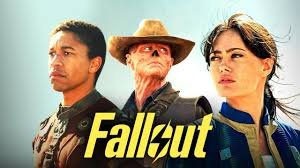
Ella Purnell plays Lucy, a Vault-dweller who starts off optimistic, polite, and almost naïve. Her performance is quietly powerful as she evolves in response to the brutal reality of the outside world. Lucy isn’t written as a typical action hero; she’s learning, adapting, and sometimes failing, which makes her very relatable.
Walton Goggins steals scenes as The Ghoul, a mutated bounty hunter with a dark past and zero patience for nonsense. His character brings both menace and humour, and Goggins clearly enjoys every second of this role. He’s morally unpredictable, which keeps you constantly guessing.
Aaron Moten plays Maximus, a member of the Brotherhood of Steel, a militaristic faction obsessed with power and technology. His character explores themes of ambition, insecurity, and blind loyalty. Maximus isn’t always likeable, but he’s definitely interesting.
The supporting cast also deserves credit. Even side characters feel purposeful, not just background noise.
Visuals and World-Building: Fallout Looks Insane
Visually, Fallout is stunning. The production design perfectly captures the retro-futuristic vibe the franchise is known for. Think 1950s aesthetics mixed with nuclear destruction. Rusted robots, abandoned diners, broken highways, and eerie landscapes all come together to create a world that feels detailed and lived-in.
The CGI is used smartly, not excessively. Creatures look terrifying, violence feels raw, and the environment itself tells stories without dialogue. You can pause almost any frame and notice something weird or darkly funny happening in the background.
What Fallout Does Really Well
One of the most likeable aspects of the show is its confidence. Fallout doesn’t try to be everyone’s comfort watch. It’s brutal, sarcastic, and sometimes emotionally cold, and that honesty is refreshing.
The writing respects the audience’s intelligence. It trusts viewers to connect dots, understand subtext, and sit with uncomfortable ideas. The humour also deserves praise. It’s not forced; it’s dry, awkward, and often pitch-black, which suits Gen Z humour surprisingly well.
Another big win is how the show handles its source material. It doesn’t blindly copy the games, nor does it disrespect them. It creates its own story within the Fallout universe, which is exactly what an adaptation should do.
Where the Series Stumbles
That said, Fallout isn’t perfect. The pacing can feel uneven, especially in the middle episodes. Some storylines take longer to pay off, which might test the patience of viewers used to faster narratives.
There are also moments where the violence feels excessive, not in impact but in frequency. While it fits the world, it can sometimes reduce emotional weight when shocking moments happen too often.
A few characters could have been explored more deeply, especially when their motivations change quickly. These aren’t deal-breakers, but they’re noticeable.
What’s Likeable and What’s Not
What’s likeable is the ambition. Fallout aims high and mostly lands it. The performances, world-building, and tone make it feel different from the usual post-apocalyptic shows that all start blending together.
What’s not as likeable is that it may not connect with viewers looking for comfort or hope. This is a cynical world, and the show doesn’t pretend otherwise. If you prefer clean heroes and clear morals, Fallout might feel emotionally distant.
Final Verdict: Is Fallout Worth Your Time?
The Fallout series is bold, weird, violent, and surprisingly thoughtful. It respects its audience, challenges expectations, and builds a world that sticks with you long after the screen goes dark. For Indian youth who enjoy layered storytelling, dark humour, and shows that don’t play safe, this one hits hard.
It’s not flawless, but it’s memorable. And in today’s crowded streaming space, that’s saying a lot. Fallout proves that video game adaptations don’t have to be embarrassing, they can actually be some of the most exciting stories on screen right now.