
Internship vs Freelance: What’s the Real Career Move?
Internship vs Freelance is honestly one of the biggest career dilemmas for our generation. If you’re in your early 20s, probably scrolling job portals at 2 AM while questioning your life choices, you’ve definitely faced this confusion. Do you go the “safe” route with an internship at a company, or do you jump into freelancing, set your own vibe, and try to make money on your own terms?
As a 25-year-old figuring things out just like you, I can tell you this isn’t a simple right-or-wrong decision. It’s more like choosing your player in a game. Both paths have their own plot, their own twists, and their own consequences
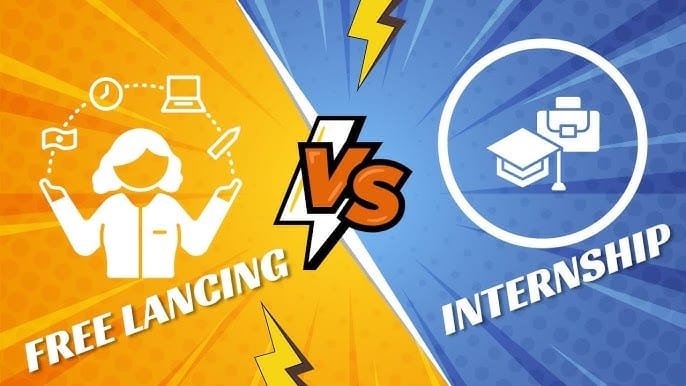
The Plot: Structured Journey vs Self-Made Story
An internship feels like entering Season 1 of a corporate drama. You’re the junior character, learning how the office ecosystem works. There’s a manager who assigns tasks, seniors who guide you, deadlines that teach discipline, and performance reviews that low-key stress you out. The plot here is structured. You start at the bottom, learn the ropes, build connections, and maybe land a pre-placement offer. It’s gradual character development.
Freelancing, on the other hand, feels like being dropped into an open-world game with no tutorial. You are the boss, the employee, the marketing team, and sometimes even customer support. The plot is unpredictable. One month you’re earning well, the next month you’re refreshing your inbox hoping for a client reply. But every win feels personal. Every project adds directly to your confidence.
Both stories can lead to success. The difference is in how much control you want over the script.
Learning Curve and Skill Development
When it comes to skill-building, internships offer structured growth. You learn how real companies function, how teams collaborate, how meetings actually work beyond college presentations. There’s mentorship. You get feedback that helps you improve. You also learn soft skills like communication, professionalism, and time management in a very real environment.
Freelancing teaches you differently. You learn by doing. There’s no one holding your hand. You pitch to clients, negotiate rates, manage deadlines, and deal with rejections. It forces you to be proactive. You figure out pricing, branding, and client psychology. It’s intense but practical. You gain confidence because you’re directly responsible for your results.
If you need guidance and a smoother transition from college to career, internships make sense. If you’re self-driven and okay with uncertainty, freelancing can accelerate your growth in unexpected ways.
Money Matters: Stipend vs Variable Income
Let’s be honest, money plays a huge role in the Internship vs Freelance debate.
Internships in India often come with modest stipends. Some are unpaid, which honestly doesn’t sit well with many of us. The positive side is stability. You know exactly how much you’re getting at the end of the month. It might not be huge, but it’s predictable.
Freelancing income is anything but predictable. Some months you might earn more than your friends in full-time jobs. Other months might be dry. But the earning potential is technically unlimited. You’re not capped by a fixed stipend. The more clients you handle, the more you can earn.
The flip side is financial anxiety. There’s no guaranteed salary. No paid leave. No HR to fall back on. You need discipline to manage irregular income.
Work Culture and Lifestyle Freedom
Internships usually mean fixed timings, reporting managers, and sometimes commuting through traffic that tests your patience. There’s structure. Some people love that routine because it brings clarity and stability. You know when to work and when to switch off.
Freelancing offers freedom. You can work from your room, a café, or even while traveling. You set your schedule. If you’re a night owl, you can work at 1 AM. If you prefer mornings, you start early. But freedom comes with responsibility. No one reminds you of deadlines. If you delay, your reputation takes a hit.
What’s likable about freelancing is the independence. What’s not so likable is the lack of boundaries. Sometimes work and personal life mix so much that you feel like you’re always “on.”
Internships are likable for the team vibe, office friendships, and exposure to a professional environment. What’s not so likable? Office politics, limited creative control, and sometimes being assigned repetitive tasks.
Security vs Risk: Stability or Leap of Faith
Internships feel safer. They build your CV in a traditional way. Big brand names on your resume can open doors later. Parents also tend to approve more because it looks stable and respectable.
Freelancing feels risky, especially in the beginning. There’s no brand name backing you. It’s just you. But it also builds a strong personal brand if done right. You create a portfolio that shows actual paid work, not just academic projects.
In the long run, both can lead to stable careers. Many freelancers eventually build agencies or move into full-time remote roles. Many interns convert to full-time employees and climb the corporate ladder.
The question is, are you comfortable taking risks early on?
Social Validation and Peer Pressure
Let’s talk about something we don’t openly admit. Social validation matters.
When you say you’re interning at a known company, people instantly understand it. There’s a sense of achievement attached to it. It feels official.
When you say you’re freelancing, reactions are mixed. Some people think it’s cool. Others think you’re “still figuring it out.” That judgment can get to you, especially when relatives start asking questions at family gatherings.
But here’s the truth. The world is changing. Remote work, gig economy, creator economy — these are not temporary trends. They are real career paths.
Mental Growth and Personal Identity
Internships teach you how to operate within systems. You learn patience, collaboration, and how to handle authority. It shapes your professional identity.
Freelancing shapes your personal identity. You discover how disciplined you are. You understand your strengths and weaknesses faster because everything depends on you.
Both experiences make you grow, just in different directions.
Final Thoughts: Which One Should You Choose?
Internship vs Freelance isn’t about which is superior. It’s about which aligns with your current phase of life.
If you’re just starting out, unsure about your field, and want structured learning, internships can be a solid foundation. If you already have a skill like design, writing, coding, editing, or marketing and you’re confident in delivering value, freelancing can give you early independence and higher earning potential.
You can also combine both. Many students intern during the day and freelance on the side. That way, you get stability and freedom together.
At 25, I’ve realized there’s no perfect roadmap. Careers aren’t linear anymore. You’re allowed to experiment. You’re allowed to switch. What matters is that you keep learning and don’t stay stuck just because something looks safer on paper.
In the end, your career is your story. Whether you choose a structured chapter or an unpredictable adventure, make sure it’s a choice you understand, not one you were pressured into.
That’s the real move.