ANIME
Nimona Review: Chaos, Heart & Queer Energy Done Right
From the moment it starts, this Nimona review feels like a punch of color, chaos, and confidence. The series doesn’t try to ease you in or play safe. It jumps straight into a world that looks cute on the outside but carries serious emotional weight underneath. Nimona is animated, yes, but it’s not “just for kids.” It’s for anyone who’s ever felt misunderstood, boxed in, or told to tone themselves down.
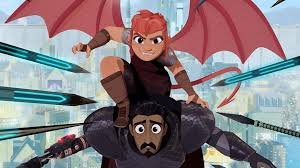
The plot is set in a futuristic medieval world where knights, technology, and rigid traditions coexist. At the center is Ballister Boldheart, a disgraced knight framed for a crime he didn’t commit. Just when things couldn’t get worse, enter Nimona—a chaotic, shape-shifting teen who proudly claims to be a villain’s sidekick.
What follows is a clash between order and rebellion. The plot isn’t just about proving innocence; it’s about questioning who decides what’s right, who gets labeled a monster, and why systems fear anything they can’t control. It blends action, humor, and social commentary in a way that feels smooth rather than forced.
The story unfolds with sharp pacing and emotional honesty. Instead of dragging things out, it focuses on character relationships and personal growth. The narrative constantly flips expectations. Just when you think you know where it’s going, it pulls you somewhere deeper.
At its core, the story is about acceptance both from society and from oneself. It deals with betrayal, fear of the unknown, and the cost of hiding who you really are. The emotional beats land naturally, never feeling manipulative. You’re allowed to laugh one moment and quietly process heavy feelings the next.
Chloë Grace Moretz voices Nimona, and honestly, she absolutely owns the role. Nimona is loud, impulsive, sarcastic, and emotionally raw. There’s chaos in her energy, but also deep vulnerability. Moretz balances humor and hurt perfectly, making Nimona feel real rather than animated.
Riz Ahmed voices Ballister Boldheart, bringing warmth and sincerity to the character. Ballister is calm, ethical, and deeply human. His quiet strength contrasts beautifully with Nimona’s wildness. Ahmed’s voice performance adds emotional depth, especially in moments of self doubt and moral conflict.
Eugene Lee Yang voices Ambrosius Goldenloin, Ballister’s former partner. Ambrosius starts off feeling like a stereotypical golden-boy hero, but slowly reveals layers of confusion, loyalty, and emotional conflict. His character arc adds complexity to the story’s themes of love and duty.
One of the biggest strengths is its message. The show talks about identity, queerness, and being labeled “other” without sounding preachy. It doesn’t explain itself endlessly or water down its point. It trusts the audience to feel and understand.
Visually, the animation style is bold and expressive. The mix of sharp lines and fluid motion gives the world a unique personality. Action scenes are energetic without being overwhelming, and emotional moments are framed with care.
The humor also deserves credit. It’s quick, sarcastic, and meme worthy without being cringey. Nimona’s one liners especially feel like they were written for today’s audience.
That said, the series isn’t flawless. Some world building elements could’ve been explored more deeply. The political system and history of the kingdom are interesting, but they stay mostly in the background.
A few side characters feel underused, and certain emotional beats could’ve benefited from more breathing room. The pacing is mostly tight, but there are moments where things move a little too fast, especially near the climax.
Also, viewers expecting a purely light hearted animated experience might be caught off guard by how heavy some themes get.
What really makes this story special is its heart. It celebrates being different without romanticizing pain. Nimona’s rage, humor, and vulnerability feel honest rather than polished.
The relationship between Nimona and Ballister is another highlight. It’s built on trust, misunderstanding, growth, and care. Their bond feels organic, not forced, and becomes the emotional anchor of the entire story.
The show also deserves appreciation for normalizing queer representation without making it the sole focus. It exists naturally within the world, which makes it even more powerful.
If you’re someone who prefers clearly defined heroes and villains, this story might challenge that comfort zone. Moral ambiguity plays a big role, and not everything is wrapped up neatly.
The tonal shifts from comedy to emotional heaviness might feel abrupt to some viewers. Nimona doesn’t hold your hand; it expects you to keep up emotionally.
This is where Nimona really shines. The story understands what it feels like to be misunderstood by systems that refuse to evolve. It captures the frustration of being judged based on fear rather than truth.
Themes of self identity, chosen family, and fighting labels resonate deeply with Gen Z values. The aesthetic, humor, and emotional honesty make it perfect for conversations, edits, and long post watch thoughts.
Wrapping up this Nimona review, the series is bold, heartfelt, and unapologetically different. It’s an animated story that doesn’t talk down to its audience and isn’t afraid to be loud, emotional, and messy.
While it has minor flaws in pacing and world-building, its strengths far outweigh them. Nimona is the kind of story that stays with you not because it tries to impress, but because it dares to be honest.
If you’re looking for animation that blends rebellion, emotion, and meaning, this one absolutely delivers.