ANIME
Beastars Review: Netflix’s Wildest Anime Surprise
Beastars review posts often describe it as “that animal anime,” but watching Beastars on Netflix proves it is way deeper than that label. At first glance, it looks like a stylised high school drama with anthropomorphic animals. Stay for a few episodes and you realise it’s actually a psychological exploration of identity, desire, power, and societal division.
As a 25-year-old who grew up thinking anime was mostly about action or fantasy quests, this one genuinely caught me off guard. It’s emotional without being melodramatic. It’s romantic without being cheesy. It’s dark without trying too hard.
Gen Z audiences who appreciate layered storytelling will find a lot to unpack here. The show does not treat viewers like kids. Instead, it challenges you to reflect on your own instincts and insecurities.
The Plot: A High School Divided by Instinct
The plot unfolds at Cherryton Academy, a school where carnivores and herbivores coexist in an uneasy balance. Tension between the two groups simmers under the surface, and a shocking incident early on exposes just how fragile that peace is.
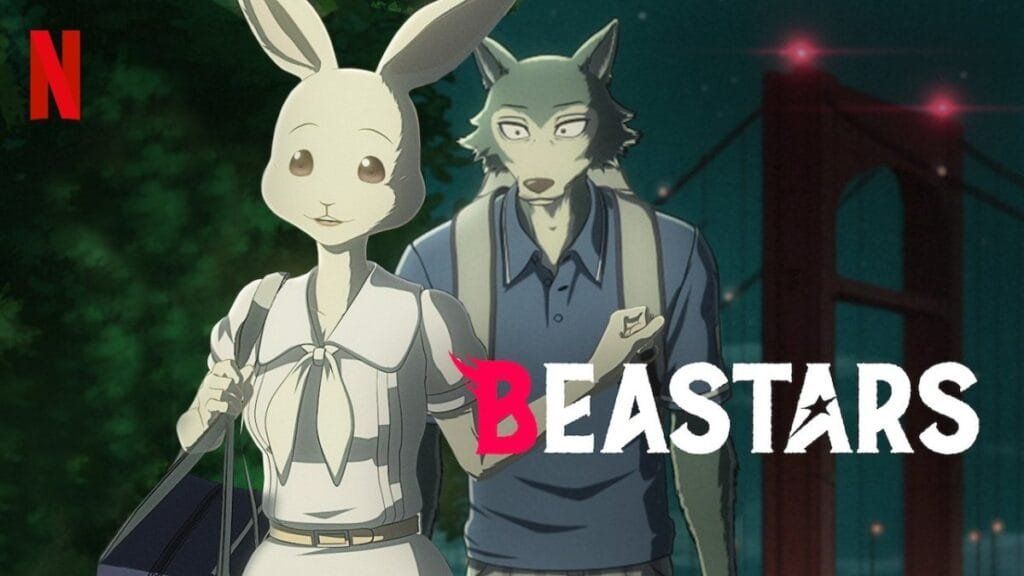
From there, the narrative centres on Legoshi, a quiet grey wolf navigating his predatory instincts while forming an unexpected connection with Haru, a small white rabbit. That dynamic becomes the emotional core of the series.
Political undertones creep in as well. Social hierarchies, prejudice, and fear drive much of the conflict. Rather than focusing solely on romance or action, the plot expands into larger commentary about society and control.
Pacing remains steady, with character-driven moments taking priority over dramatic spectacle. The tension builds through conversations and internal struggles rather than constant fights.
Story Without Spoilers: Identity and Inner Conflict
Without revealing major twists, the storyline explores the battle between instinct and morality. Legoshi’s internal conflict feels raw and relatable. He struggles with attraction, guilt, and fear of harming the very person he cares about.
Haru’s character challenges stereotypes. She refuses to be defined by vulnerability despite being physically small. Their relationship becomes a metaphor for forbidden connections shaped by societal expectations.
Louis, a red deer with strong leadership energy, adds another layer. His ambition and hidden insecurities drive important arcs. Power dynamics within the student council and drama club further enrich the narrative.
Themes of discrimination and identity resonate strongly. Carnivores are feared. Herbivores feel vulnerable. That tension mirrors real-world divisions in subtle yet powerful ways.
The writing balances romance, drama, and social commentary smoothly. Emotional beats land because they feel authentic rather than exaggerated.
Main Characters and Voice Cast Performances
Legoshi is voiced by Chikahiro Kobayashi, who delivers a performance full of hesitation and depth. His tone captures vulnerability perfectly.
Haru, voiced by Sayaka Senbongi, brings strength and complexity to her character. Her voice carries both softness and determination.
Louis is portrayed by Yuki Ono. His confident yet layered performance adds gravitas to the show’s political undertones.
Supporting characters, from classmates to authority figures, feel distinctive. Voice acting overall elevates emotional scenes, making internal conflicts more impactful.
Studio Orange’s animation style, heavily reliant on CGI, might feel unusual initially. However, expressions and body language remain detailed enough to convey subtle emotions.
What Works: Strengths of This Psychological Anime
Character development stands out immediately. Growth feels gradual and earned. Legoshi’s journey is especially compelling.
World-building deserves appreciation. The rules governing carnivores and herbivores feel consistent and believable.
Themes resonate beyond the screen. Discussions about prejudice and identity feel relevant to modern youth experiences.
Music and sound design complement the atmosphere beautifully. Background scores enhance emotional tension without overpowering scenes.
Another strong aspect is bold storytelling. The series does not shy away from uncomfortable topics. It treats its audience as mature thinkers.
For Indian Gen Z viewers exploring diverse anime genres, this series offers something unique and thought-provoking.
Where It Slows Down: Flaws and Limitations
The CGI animation style may not appeal to everyone at first. Traditional 2D anime fans might need time to adjust.
Pacing occasionally feels uneven. Some episodes move quickly while others linger on introspection.
Certain side characters could have received more development. Their arcs sometimes feel secondary compared to the main trio.
Heavy themes might not suit viewers looking for light entertainment. Emotional intensity remains consistent throughout.
Even with these drawbacks, the overall narrative remains engaging.
What Is Likable and What Is Not
The most likable aspect is emotional honesty. Characters confront their flaws openly.
Romantic tension feels mature rather than dramatic for effect.
Social commentary adds depth without becoming preachy.
On the other hand, darker undertones may feel heavy for casual viewers.
Visual style, although distinctive, might divide opinions.
Still, the uniqueness of the series outweighs its limitations.
Final Verdict: Should You Watch It?
Beastars review discussions continue because the series leaves a lasting impression. It challenges perceptions while delivering compelling character arcs.
As a 25-year-old navigating identity and ambition in a fast-moving world, watching Legoshi struggle with self-control and self-worth feels strangely relatable. The show reflects internal battles many of us quietly face.
If you are searching for an anime that blends romance, psychology, and social commentary, this one deserves attention.
It is bold, layered, and emotionally intelligent. Not your typical high school story, but definitely one that stays with you long after the credits roll.